What Volcanoes, Storms, and Earthquakes Reveal About Earth’s Inner Structure
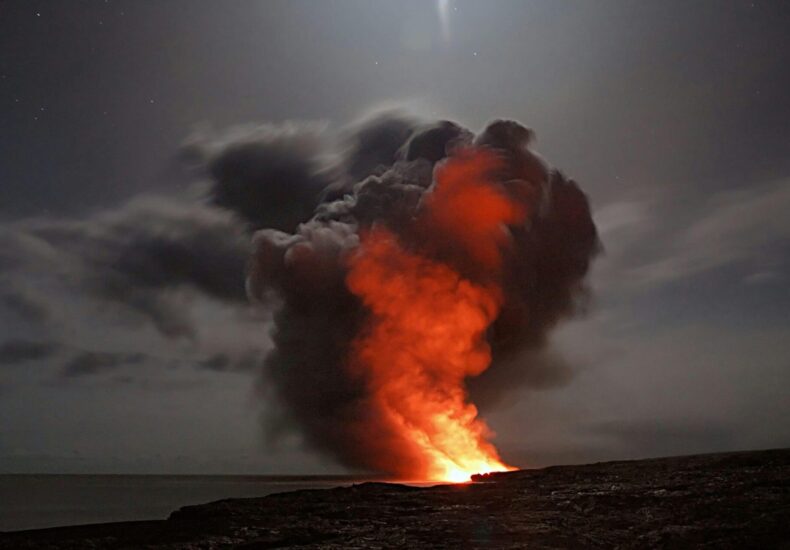
Volcanoes are among the most dramatic manifestations of Earth’s internal processes, and they provide scientists with a unique glimpse into the planet’s inner workings. At their core, volcanoes reveal the movement of molten rock, or magma, from deep within the Earth toward the surface, highlighting the dynamics of the mantle and the crust. The existence of volcanoes along tectonic boundaries, such as the Pacific Ring of Fire, illustrates the relationship between tectonic plate movement and the circulation of heat and material in the planet’s interior. By studying volcanic activity, scientists gain critical insight into the composition, temperature, and behavior of Earth’s mantle, which otherwise remains inaccessible to direct observation.
Magma is formed when high temperatures and pressures within the mantle cause rock to partially melt. The characteristics of volcanic eruptions, including lava composition, eruption style, and gas content, reflect differences in mantle chemistry and melting processes. For example, basaltic magma, which is low in silica, originates from the upper mantle and tends to produce effusive, flowing eruptions, while more silica-rich magmas, derived from the melting of the crust or modified mantle material, generate explosive eruptions. The type of magma provides clues about the depth and source of melting, the structure of the crust, and even the presence of volatiles such as water and carbon dioxide, which influence tectonic and thermal processes deep below the surface.
Volcano monitoring techniques further illuminate Earth’s interior. Seismographs can detect tremors generated by moving magma, indicating how magma pathways form and evolve. Gas emissions provide information on the volatile content of the mantle, while ground deformation measurements reveal pressure changes within subsurface magma chambers. The study of volcanic rocks, such as those brought to the surface during eruptions, allows geologists to analyze isotopic compositions, mineral structures, and trace elements, which collectively reconstruct the temperature, pressure, and chemical environment of the source regions deep within the Earth. Through these observations, volcanoes act as natural probes, enabling scientists to explore the otherwise hidden layers of our planet.
The spatial distribution of volcanoes also reflects the structure of Earth’s interior. Hotspot volcanoes, such as those forming the Hawaiian Islands, arise from mantle plumes that originate deep in the Earth, possibly near the core-mantle boundary. Their existence suggests that mantle convection is not uniform but involves complex, localized upwellings of heat and material. By mapping hotspots, scientists can infer the flow patterns of the mantle and the thermal structure of the deep Earth. In sum, volcanoes are not merely destructive natural phenomena; they are essential tools for understanding the composition, temperature, and dynamic behavior of the Earth’s interior, offering a tangible connection between surface observations and the hidden depths below.
Storms and Their Connection to Earth’s Energy Systems
While storms do not directly expose the solid structure of Earth, they reveal important information about the distribution and transfer of energy within the planet’s atmosphere and hydrosphere, which are intimately linked to the heat generated by Earth’s interior. Earth’s internal heat contributes to convection in the mantle, which drives plate tectonics and indirectly influences surface conditions, including topography and ocean circulation, which in turn affect storm development. Although atmospheric phenomena are powered primarily by solar energy, understanding how storms interact with Earth’s surface provides indirect clues about the underlying processes shaping the planet.
The formation of large-scale storms, such as hurricanes or typhoons, depends on the interaction between atmospheric dynamics and oceanic conditions. Ocean currents are influenced by the configuration of continents, seafloor topography, and heat distribution—all of which are consequences of Earth’s internal structure and tectonic activity. For example, mid-ocean ridges, volcanic seamounts, and underwater plateaus affect ocean circulation patterns, which modify surface temperatures and wind patterns, creating conditions conducive to storm development. By studying the frequency, intensity, and tracks of storms, scientists can infer how the arrangement of land and sea—shaped by tectonic and volcanic processes—affects climate and energy transfer in the atmosphere.
Furthermore, storm patterns can reveal how energy is stored and released in the Earth system. Cyclones and monsoons are examples of how large-scale pressure and temperature gradients drive movement in the atmosphere. These gradients are influenced not only by solar heating but also by the long-term effects of continental uplift, volcanic outgassing, and seafloor spreading—all linked to Earth’s internal activity. Storms act as a barometer for the planet’s heat balance, showing how the interaction between internal and external forces generates observable patterns of energy flow. Researchers use climate models that incorporate topography, ocean currents, and energy input to simulate storm behavior, which helps them understand the coupling between surface processes and the underlying geological structures.
Even extreme weather events like tornadoes and intense thunderstorms are indirectly connected to the Earth’s internal structure through their dependence on terrain. Mountain ranges formed by tectonic collisions, such as the Himalayas, influence wind patterns, precipitation distribution, and the formation of storm systems. The height, orientation, and spacing of mountains determine how air masses are forced to rise, cool, and release moisture, often intensifying storm systems. In this sense, storms act as indicators of the Earth’s geological past, revealing how tectonic activity has sculpted the surface in ways that directly impact atmospheric dynamics, connecting the planet’s interior forces to observable surface phenomena.
Earthquakes as Probes into the Deep Earth
Earthquakes are among the most informative natural events for understanding Earth’s interior structure. They occur when stress accumulates along faults in the Earth’s crust or at tectonic plate boundaries, resulting in sudden release of energy. Seismic waves generated by earthquakes travel through the Earth’s interior, and their speed, direction, and attenuation provide critical information about the materials they pass through. By analyzing these waves, seismologists have been able to map the crust, mantle, and core in remarkable detail, revealing the layered structure of the planet.
Seismic waves are categorized into P-waves (primary or compressional) and S-waves (secondary or shear). P-waves can travel through both solid and liquid materials, whereas S-waves can only move through solids. The absence of S-wave propagation through certain regions, such as the outer core, provides clear evidence that these areas are liquid. Differences in wave speed also reveal variations in composition and density within the Earth. For example, waves slow down when passing through hotter, less rigid mantle material and speed up in cooler, more rigid areas. These observations have allowed scientists to construct detailed models of Earth’s interior, including the division into crust, upper mantle, lower mantle, outer core, and inner core.
Earthquake distribution also reflects the dynamics of the planet’s interior. Most earthquakes occur along tectonic plate boundaries, where the movement of rigid plates over the viscous mantle generates stress accumulation. Subduction zones, where one plate descends beneath another, produce the deepest earthquakes, offering insight into how mantle convection shapes plate motion. The pattern, depth, and magnitude of earthquakes provide indirect evidence for mantle viscosity, temperature gradients, and the mechanical properties of rocks at depth, making seismic activity a powerful tool for probing Earth’s interior.
Modern seismology leverages networks of sensors around the globe to capture earthquake data, which is then used to create three-dimensional images of Earth’s inner structure. Techniques like seismic tomography allow scientists to visualize areas of differing density, temperature, and composition within the mantle and core. These images reveal large-scale structures such as subducted slabs descending into the lower mantle and upwelling mantle plumes that may feed hotspots. Earthquakes, therefore, are not just surface phenomena but essential diagnostic tools that allow humanity to “see” into the otherwise inaccessible interior of our planet.
Conclusion
Volcanoes, storms, and earthquakes are more than dramatic natural events; they are essential windows into the hidden workings of our planet. Volcanoes expose the chemical and thermal conditions of the mantle, providing direct insight into the processes that generate magma and shape tectonic features. Storms reflect the surface consequences of Earth’s internal processes, revealing how topography, ocean circulation, and energy distribution are influenced by tectonic and volcanic activity. Earthquakes act as natural seismographs, sending waves through the planet that allow scientists to map its interior layers with remarkable precision.
By studying these phenomena together, scientists have gained a comprehensive understanding of Earth’s layered structure, the dynamics of plate tectonics, and the flow of energy and material from the core to the surface. These natural events demonstrate the intimate connection between Earth’s interior and the observable surface, highlighting a planet that is far from static but constantly reshaped by powerful internal and external forces. Understanding these processes is not only critical for scientific knowledge but also for preparing for natural hazards and appreciating the complex, dynamic planet we call home.