Online Courses vs Traditional School
The advancement of technology has dramatically changed the course of learning and education. Digital age progression introduced a new form of education system—online courses, which compete against the traditional school system in effectiveness and convenience. This article aims to evaluate both educational models, comparing their benefits and drawbacks.
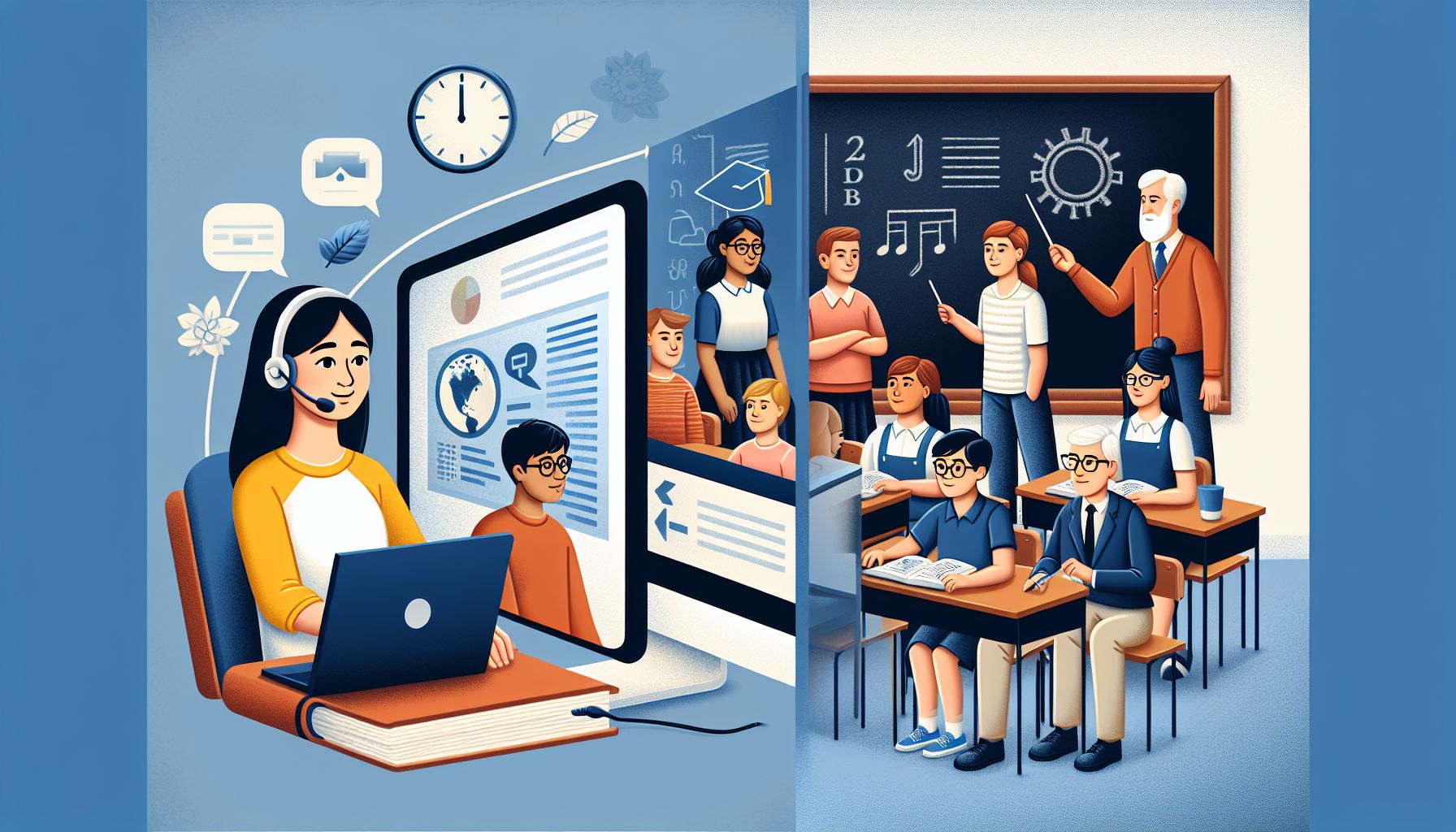
What are Online Courses?
Online courses are digital education programs that students can complete over the internet. They offer a variety of disciplines similar to traditional schools but place a strong reliance on technology. Students can do coursework from any location with an internet connection, enabling a flexible schedule. Many reputable universities such as Harvard University and MIT now offer online courses.
Pros and Cons of Online Courses
Online courses provide a flexible and self-paced learning environment. They allow students to balance work, studies, and personal commitments effectively. Additionally, online courses offer the benefit of location independence, as students can learn from any site globally.
However, lack of face-to-face interaction might result in isolation for some learners. It also requires strong self-discipline and motivation, as procrastination could be a potential issue.
What is Traditional School?
Traditional schools operate in a physical setting where learners and educators interact face-to-face. It includes a structured schedule, where learners attend classes at specific times. Traditional schools offer educational programs ranging from elementary education to higher studies, such as in Cambridge University.
Pros and Cons of Traditional School
Traditional schools provide an interactive environment that enhances social learning. Direct interaction with educators offers immediate feedback, and structured schedules help to instill discipline in students.
Yet, traditional school learning lacks flexibility. Students must attend fixed-schedule classes and follow the curriculum pace, regardless of their personal learning speeds.

Comparing Online Courses and Traditional School
The decision between online courses and traditional school comes down to personal preferences and learning styles. Online courses are an excellent choice for the learner seeking flexibility, location independence, and self-paced learning. On the other hand, traditional schools offer the advantages of interactive learning, direct feedback, and structured discipline ideal for those who thrive in a more regulated setting.
While comparing both methods of education, the importance of practical knowledge and recreational activities offered by traditional schools cannot be overlooked. Simultaneously, the rising popularity of online courses shows their potential as preferred learning channels. For instance, ice cream cone edibles are popular among learners who relish learning new recipes via online platforms as it combines the joy of eating with acquiring knowledge.
Conclusion
Education systems evolve with societal progress. Online courses have significantly grown as potent alternatives to traditional schools in the digital age. However, traditional schools also hold their unique benefits. Therefore, every learner needs to make their own decision based on their specific learning style, career goals, and daily schedule. Before finalizing a choice, it is beneficial to research and weigh both methods’ pros and cons.