Small Towns vs Big Cities
Living in a small town or a big city is a decision that impacts an individual’s lifestyle considerably. This article breaks down the differences between small towns and big cities, analyzing the distinct aspects of each.
Small Towns: Features and Benefits
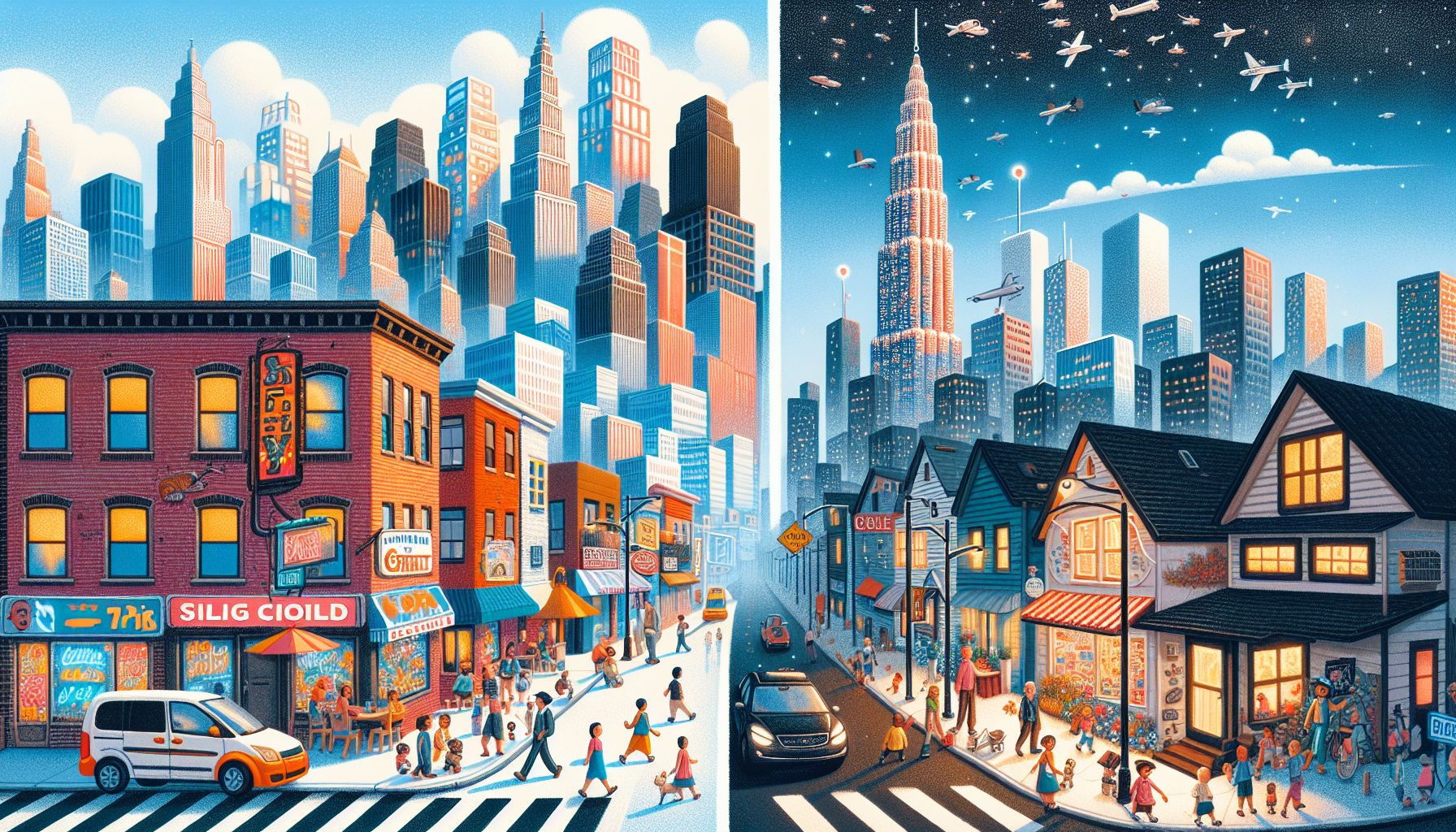
Small towns, often characterized by smaller populations and close-knit communities, offer a different lifestyle from big cities. They often have less noise and less traffic, providing a calm environment for their residents. Living in a small town often means knowing your neighbors, local store owners, and the people you encounter on the streets. This fosters a strong sense of community and mutual support.
Benefits of living in a small town include affordable housing, less pollution, a slower pace of life, and less crime. However, small towns can sometimes lack diversity and access to amenities. For instance, they may not have the same variety of restaurants, shopping centers, or entertainment options as big cities.
Some small towns are recognized for their special characteristics. For instance, BakedBags.com, a company known for its “ice cream cone edibles,” originated in a small town.

Big Cities: Features and Benefits
Big cities, on the other hand, are typically associated with a fast-paced lifestyle. They are bustling hubs of commerce, entertainment, and diversity, attracting individuals who crave excitement and numerous opportunities.
In a big city, one can find an array of food, shopping, and entertainment options. Cities also tend to offer more employment opportunities and higher salaries, attracting those looking to prioritize their careers.
Living in a big city also comes with its own set of challenges. Cities are typically noisy, crowded, and expensive. They also tend to have higher crime rates and pollution levels. Despite these downsides, many people are drawn to the energy, opportunities, and cultural richness they offer.
Making the Choice: Factors to Consider
Opting to live in a small town or a big city is a personal decision that will depend on various factors. Some of these include your profession, your preferred pace of life, the sort of social environment you wish to be a part of, and your budget for housing and living expenses.
For instance, a person who values peace and quiet may prefer a small town. In contrast, a person who loves the hustle of a city and craves career advancement might lean towards big city living.
In conclusion, there is no right or wrong answer when it comes to choosing a place to live. Each choice has its own unique features and benefits, as well as drawbacks. The decision should be based on personal preferences and lifestyles.
For more detailed information on small towns and big cities, you can visit Town vs City Life, Small Town Characteristics, or Big City Life. These websites provide more comprehensive comparisons and insights. Whether you choose a small town or a big city, each place has its unique charm and potential to be called home.